Your Users Expect Intelligence Built Into Your Product
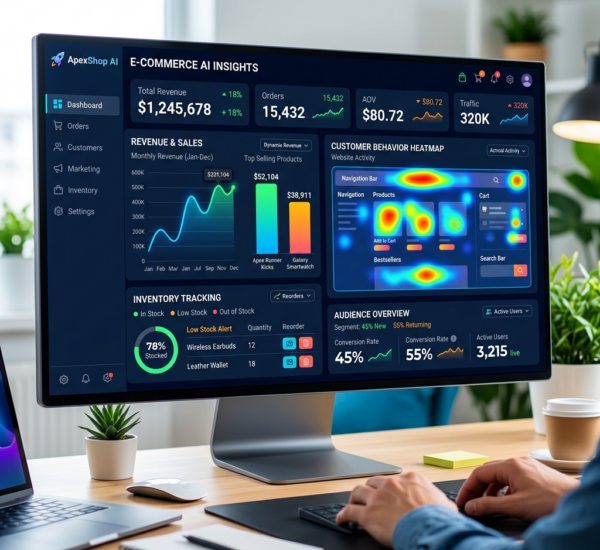
Users no longer accept products that simply display raw data. They expect embedded analytics — AI-powered insights, visualizations, and recommendations built directly into the applications they already use. Whether you’re building a SaaS platform, an internal tool, or a customer-facing portal, embedded analytics has become a competitive requirement.
According to Mordor Intelligence, the embedded analytics market will reach $77 billion by 2026, growing at 13% annually. The driver isn’t vendor hype — it’s user demand. When Salesforce added Einstein Analytics natively into their CRM, adoption of analytics features jumped 40%. When Shopify embedded AI-powered sales insights into their merchant dashboard, merchant engagement with data increased 3x.
What Is Embedded Analytics?
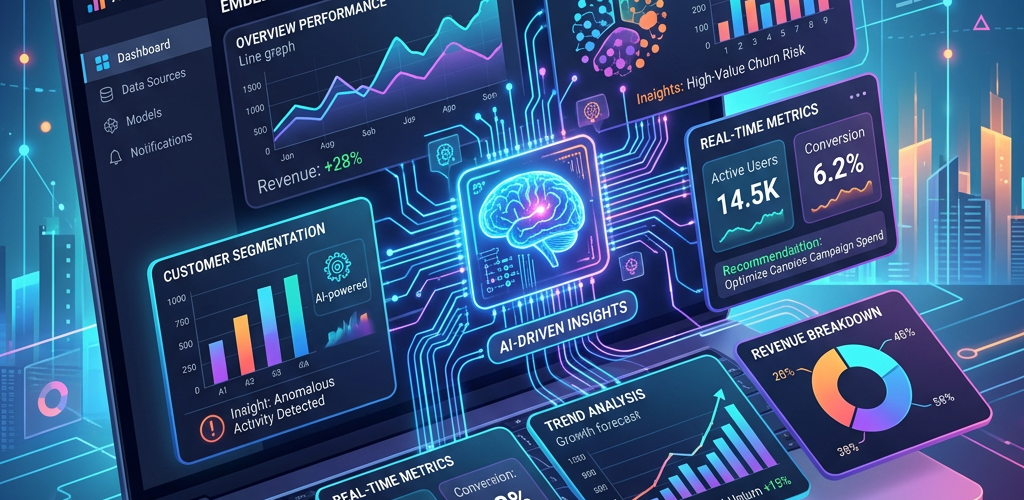
Embedded analytics integrates data analysis, visualization, and AI-powered insights directly into a software application — rather than requiring users to switch to a separate BI tool. The analytics appear as a native part of the product experience.
Examples you’ve likely used: Spotify Wrapped (embedded music listening analytics), Uber’s driver earnings dashboard (embedded trip and revenue analytics), or LinkedIn’s profile view statistics (embedded audience analytics). Each of these takes complex data and presents it contextually within the product.
For B2B SaaS companies, embedded analytics means giving your users dashboards, reports, natural language queries, and AI insights without them ever leaving your application.
Build vs. Buy: The Economics Are Clear
Building analytics from scratch is one of the most commonly underestimated engineering projects. What starts as “let’s add a few charts” typically evolves into: a data pipeline, a query engine, a visualization layer, role-based access controls, export functionality, scheduled reports, and eventually AI/ML capabilities. Teams routinely spend 6-12 months and $500K+ building analytics that a purpose-built platform delivers out of the box.
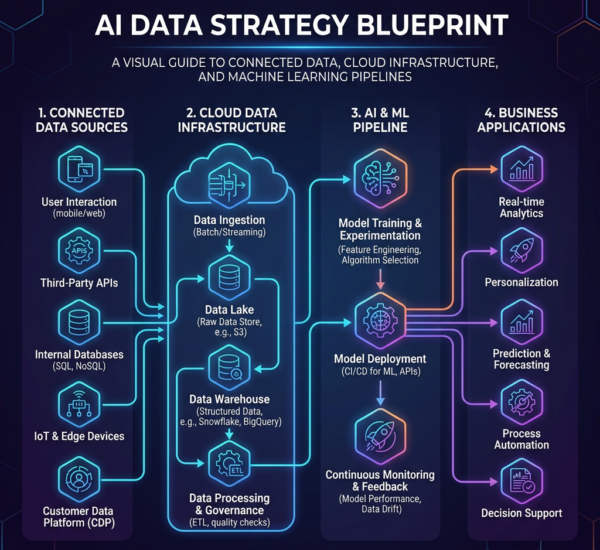
The buy-and-embed approach has won for most teams. Platforms like Pulse AI offer embeddable analytics components — dashboards, charts, natural language query interfaces, and AI insights — that integrate into your product via APIs and SDKs. Your engineering team focuses on your core product; the analytics platform handles the data intelligence layer.
Key Capabilities of Modern Embedded Analytics
White-Label Dashboards
Fully customizable dashboards that match your product’s design language. Your users see analytics that look and feel native to your application — not a third-party widget. Colors, fonts, layouts, and interactions all align with your brand.
Natural Language Querying
Let your users ask questions in plain English: “What were my top customers last quarter?” or “Show me revenue by product category for the last 90 days.” The embedded NLQ interface translates natural language into data queries and returns visualized results — no SQL required from your users.
AI-Powered Insights
Automated anomaly detection, trend analysis, and predictive forecasting — all embedded within your product. Your users get proactive alerts (“Your conversion rate dropped 12% today — here’s what changed”) without building any of the ML infrastructure yourself.
Self-Service Reporting
Give your users the ability to create custom reports, schedule automated deliveries, and export data in their preferred format. Self-service reduces your support burden and increases user satisfaction — they get the data they need without filing a ticket.
Implementation: Faster Than You Think
Modern embedded analytics platforms are designed for rapid integration. A typical implementation follows this path:
Week 1 — Connect and configure. Connect your product’s database to the analytics platform. Define the data model (which tables, fields, and relationships are available for analysis). Set up multi-tenant isolation so each of your customers sees only their own data.
Week 2 — Embed and customize. Integrate the analytics components into your product using the provided SDK (React, Vue, Angular, or vanilla JS). Customize the visual theme to match your product. Configure role-based access controls.
Week 3 — Test and launch. QA the integration with real data. Validate multi-tenant data isolation. Beta test with a subset of users. Iterate based on feedback.
Total time: 2-4 weeks for a production-ready embedded analytics experience. Compare that to 6-12 months of custom development.
Multi-Tenancy: The Non-Negotiable Requirement
If you’re building a SaaS product, multi-tenant data isolation is the most critical requirement for embedded analytics. Each of your customers must see only their own data — a data leak between tenants is a business-ending event.
Purpose-built embedded analytics platforms handle multi-tenancy at the architecture level: row-level security, tenant-aware caching, isolated query execution, and audit logging. This is incredibly complex to build from scratch and is one of the strongest arguments for the buy-and-embed approach.
The Business Impact
Companies that embed analytics into their products consistently report: higher user engagement (users who interact with analytics features have 2-3x higher retention), premium pricing power (analytics-enriched tiers command 20-40% higher prices), reduced churn (data-driven users are stickier — they’ve built workflows around your insights), and competitive differentiation (analytics capabilities are increasingly table stakes in B2B SaaS).
For product teams evaluating embedded analytics, the question isn’t whether to offer it — it’s how quickly you can ship it. The market has moved past “nice to have.”
Frequently Asked Questions
What’s the difference between embedded analytics and a BI tool?
A BI tool (Tableau, Power BI, Looker) is a standalone platform where users go to analyze data. Embedded analytics integrates that analytical capability directly into your product, so users never leave your application. The analytics feel native rather than bolted on.
How does pricing work for embedded analytics platforms?
Most platforms price based on the number of embedded users (your end customers who access analytics) or query volume. Some offer flat-rate pricing for unlimited users. Typical costs range from $500-$5,000/month depending on scale and features — significantly less than the engineering cost of building in-house.
Can I embed analytics in a mobile app?
Yes. Modern embedded analytics platforms offer responsive components that work across web and mobile. Some provide native iOS/Android SDKs for deeper integration. The key is ensuring the analytics experience is optimized for mobile screen sizes and touch interactions.
Do my users need technical skills to use embedded analytics?
No. The whole point of embedded analytics is making data accessible to non-technical users. Natural language querying, pre-built dashboards, and AI-powered insights mean your users get value without SQL, coding, or data analysis expertise.