You have been tracking your sales in spreadsheets, watching the numbers go up and down, and wondering: is there a way to know what next month will look like before it happens? The promise of AI-powered sales forecasting sounds almost too good to be true — but in 2026, it is very real, and it is more accessible than you might think.
The short answer: yes, AI can predict your sales numbers with meaningful accuracy. But the long answer matters more — because understanding how it works, what it needs from you, and where it falls short is the difference between a useful forecast and an expensive guessing machine.
How AI Sales Prediction Actually Works
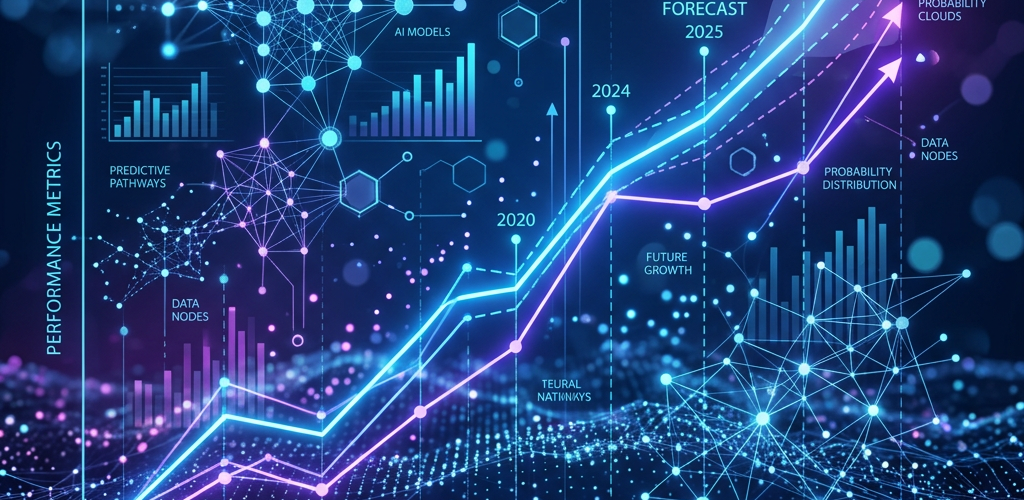
AI sales forecasting uses machine learning algorithms to analyze your historical sales data and identify patterns that humans cannot see. These patterns include seasonality (your sales spike every December), trends (you have been growing 5% month-over-month), cyclical patterns (sales dip every time a competitor runs a promotion), and external correlations (your sales increase when the weather gets warmer).
The AI trains on your past data, learns these patterns, and then projects them forward to predict future sales. The most common algorithms used include time series models (ARIMA, Prophet), gradient boosting (XGBoost, LightGBM), and deep learning models (LSTMs, Transformers). You do not need to understand these algorithms — modern tools like Pulse AI handle the model selection and training automatically.
What Accuracy Can You Realistically Expect?
This is the question everyone wants answered, and the honest answer depends on your data. For businesses with at least 12-24 months of consistent sales history, AI forecasting typically achieves 80-95% accuracy for monthly predictions and 70-85% accuracy for weekly predictions. Daily predictions are less reliable unless you have very high-volume, consistent sales patterns.
For context, most human-generated sales forecasts achieve 60-75% accuracy according to Gartner research. AI does not eliminate uncertainty, but it significantly reduces it — and it does so without the optimism bias that plagues human forecasters.
Factors that improve accuracy include longer history of consistent data, stable business model without major recent changes, multiple data points beyond just revenue (marketing spend, website traffic, lead counts), and regular purchasing patterns from customers.
Factors that reduce accuracy include businesses with fewer than 12 months of data, highly irregular or one-off sales (consulting, custom projects), major market disruptions or business model changes, and businesses with very few transactions per month.
What Data Does AI Need to Predict Sales?
At minimum, AI needs your historical sales data with dates and amounts. The more granular, the better — daily transactions outperform monthly summaries. But the real power comes from adding context data:
Marketing data — ad spend by channel, email campaign metrics, content publishing dates. This helps the AI understand what drives sales, not just when they happen.
Lead and pipeline data — if you track leads through a CRM, the AI can forecast based on your current pipeline, not just historical patterns. This is especially powerful for B2B businesses where sales cycles are longer.
External data — industry trends, competitor activity, economic indicators, even weather data for weather-sensitive businesses. Advanced AI tools can incorporate these signals to improve predictions.
Product and pricing data — changes in pricing, new product launches, discontinued products. The AI needs to know about these changes to avoid projecting old patterns into a new reality.
AI Sales Forecasting Tools for Small and Mid-Sized Businesses
Pulse AI combines AI analytics with predictive forecasting in a single platform. Connect your data sources — CRM, payment processor, spreadsheets — and Pulse AI automatically builds forecasting models. You can ask questions like “What will revenue look like next quarter?” or “How would a 20% increase in ad spend affect sales?” and get data-backed answers. Best for businesses that want forecasting as part of a broader analytics platform.
HubSpot Forecasting is built into HubSpot’s Sales Hub. It uses your pipeline data to predict close rates and revenue. Limited to HubSpot data, but if your sales process lives in HubSpot, it is seamless. Best for B2B companies using HubSpot as their primary CRM.
Salesforce Einstein offers AI-powered forecasting within the Salesforce ecosystem. Powerful but expensive and complex. Best for larger organizations already invested in Salesforce.
Shopify Analytics provides basic sales predictions for e-commerce stores. Limited in depth but requires zero setup. Best for Shopify merchants who want simple forecasts without additional tools.
Real-World Use Cases: Where AI Sales Prediction Delivers
Inventory planning. An e-commerce brand uses AI to predict demand for each product SKU, reducing overstock by 30% and stockouts by 45%. The AI accounts for seasonality, promotion schedules, and trend data to optimize purchasing decisions.
Revenue forecasting. A SaaS company predicts monthly recurring revenue with 92% accuracy by feeding the AI their pipeline data, trial conversion rates, and churn patterns. The CFO uses these forecasts for budget planning and investor reporting.
Staffing optimization. A services business predicts busy and slow periods, adjusting staffing levels proactively instead of reactively. The AI identified a seasonal pattern the owner had never noticed, saving $40,000 annually in overtime costs.
Marketing budget allocation. A D2C brand uses AI to predict which marketing channels will drive the most sales next month, shifting budget dynamically. The result: 25% improvement in return on ad spend within three months.
Limitations and Honest Caveats
AI sales prediction is not a crystal ball. It cannot predict true black swan events — a pandemic, a viral TikTok, a major competitor going bankrupt. It works by finding patterns in historical data and projecting them forward, which means it assumes the future will resemble the past to some degree.
It also requires clean, consistent data. If your sales records are messy, full of gaps, or only cover a few months, the predictions will be unreliable. Garbage in, garbage out applies doubly to AI forecasting.
Finally, AI forecasts should inform decisions, not replace judgment. Use them as one input alongside your market knowledge, customer conversations, and business intuition. The best outcomes come from combining AI predictions with human context.
How to Get Started With AI Sales Forecasting
Start with what you have. Export your sales history (at least 12 months of transactions with dates and amounts) and upload it to an AI analytics tool like Pulse AI. You will get an initial forecast within minutes.
Add context data gradually. Once your basic forecast is running, connect additional data sources — marketing spend, lead pipeline, website traffic. Each additional signal improves accuracy.
Validate before you trust. Compare AI predictions against your actual results for 2-3 months before making major business decisions based on them. This builds confidence and helps you understand where the AI is strong vs. weak for your specific business.
Iterate and improve. Forecasting gets better over time as the AI accumulates more data. The accuracy you see in month one will be significantly lower than what you see in month six. Commit to the process.
Frequently Asked Questions
How much historical data do I need for AI sales forecasting?
Minimum 12 months for basic forecasting. 24 months or more gives significantly better results because the AI can detect annual seasonality patterns. Some tools like Pulse AI can work with as little as 6 months of data but will flag that predictions may be less reliable.
Can AI predict sales for a new product with no history?
Not directly from sales data, but AI can use proxy data — similar products in your catalog, market research data, competitor benchmarks, and pre-launch signals like email signups or pre-orders. The predictions will be less accurate than for established products, but they still outperform gut estimates.
Is AI sales forecasting only for large companies?
No. Tools like Pulse AI are specifically built for small and mid-sized businesses. You do not need a data science team or enterprise software budget. If you have a spreadsheet with 12 months of sales data, you have enough to start. Pricing for SMB-focused tools starts at a fraction of what enterprise solutions cost.
How often should I update my sales forecast?
With AI tools, forecasts update automatically as new data flows in. Review the forecast weekly or monthly depending on your business pace. The key is not how often you generate a new forecast, but how often you compare predictions against actuals and use that feedback to make decisions.